A Beginner's Guide to Residential Gate Types and Where to Use Them
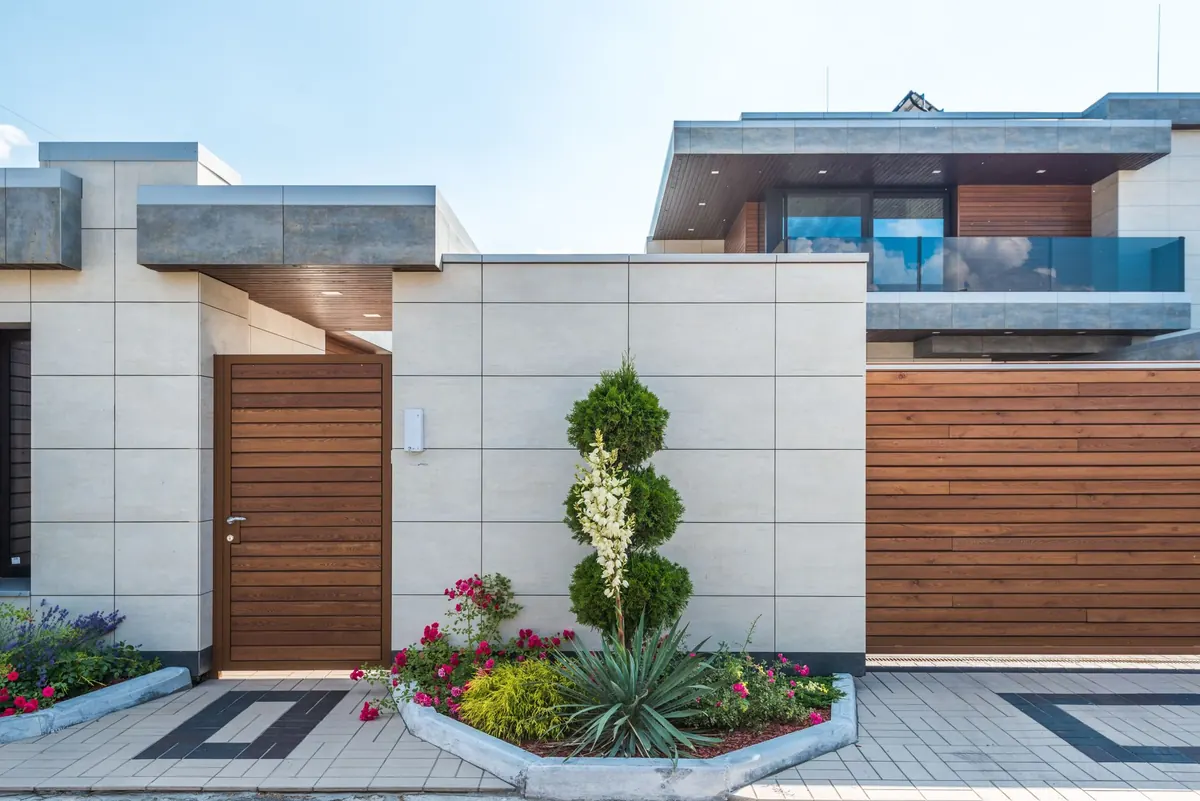
Most homeowners start shopping for a gate with a picture in mind and no measurements in hand. That order is backwards, but it is understandable. A gate does two jobs at once: it marks where the property begins, and it controls how people get in. Get the type right first and the rest of the decisions — material, width, hardware, automation — fall into place. Get it wrong and you end up with a handsome gate that scrapes the bumper of every car that rolls under it.
What follows is a plain tour of the four gate families most homes use, what each one does well, and how to tell which one belongs where.
Driveway gates: the widest and heaviest choice
A driveway gate spans the vehicle entrance, which means it starts wide and gets heavier from there. A single leaf commonly runs 12 to 14 feet; double gates start around 16 feet and climb. That width brings weight, and weight drives everything else — post size, footing depth, hinge ratings, and whether the gate can be automated at all.
Materials matter here more than anywhere else. Powder-coated aluminum stays light and resists rust. Steel and wrought iron carry a traditional look but demand maintenance in wet climates. Wood and composite look warm and can be built solid for privacy, though they catch wind like a sail. Whatever you choose, the frame does the structural work, and a gate with a flimsy frame will sag no matter how good the finish looks on day one.
Driveway gates also need room to operate. A swinging gate needs a flat apron and space for the leaf to arc inward or outward. A sliding gate needs a straight run of fence-line at least as long as the opening — or a cantilever design if nothing can roll along the ground.
Pedestrian gates: the one everyone actually touches
The driveway gate gets the attention, but the pedestrian gate takes the daily wear. This is the gate the mail carrier uses, the one the kids leave open, the one you shoulder through with grocery bags.
Standard walk-gate openings run about three to four feet, with the leaf sized to clear the latch hardware comfortably. Beyond size, three details separate a gate that lasts from one that annoys you for a decade:
- Self-closing hinges. A spring hinge or a gate closer keeps the gate shut behind you, which matters for pets and for any gate guarding a pool or water feature.
- Climbability. On a tall privacy gate, keep horizontal rails spaced so they do not read as a ladder, and set the latch out of easy reach from the outside.
- Height continuity. Match the gate height to the adjoining fence. A gate that steps down six inches looks like an afterthought and leaves a gap at the post.
One note on pool and water-safety enclosures: many jurisdictions have specific requirements for gate hardware, latching height, and opening direction. Check with your local building department before you buy, since those rules vary by location.
Ornamental gates: style you can see through
Ornamental gates — pickets, scrollwork, spears, geometric panels — are the default for front yards that want presence without a solid wall. The open design keeps sightlines to the house and landscaping intact, which reads as welcoming rather than defensive, and it lets light and air move through, which reduces wind load on the frame.
Aluminum is the practical modern choice: light enough for modest posts, and it holds a powder-coat finish well. Iron and steel offer a forged look and can be built to heavier weights, but plan on periodic touch-ups wherever the finish chips. As with any gate, the design should relate to the house, not just the fence. A low ranch home and a two-story colonial rarely want the same picket spacing or the same amount of scrollwork.
Privacy gates: solid, quiet, and heavier than they look
Solid gates close off a view. They work on street-facing courtyards, between the garage and the house, around hot tubs and side yards, and anywhere the point is to stop eyes rather than stop feet.
Because a solid panel catches wind, the structure has to be more conservative than the design suggests: heavier posts, deeper footings, diagonal bracing, and a frame built to resist twisting. Small gaps between boards or a ventilated top section ease pressure and let the gate dry out. Where the gate is wide or the driveway slopes, sliding the panel sideways often beats trying to swing a heavy, wind-catching leaf.
Swing or slide?
This decision follows the site, not the catalog.
Swing gates
Best where the ground is flat and there is clear space for the arc. They are simpler mechanically, easier to open by hand in a power outage, and they suit symmetrical entrances. On slopes, a swing gate can hang at an angle and drag, so the hinge geometry has to be planned rather than guessed.
Sliding and cantilever gates
Best for sloped driveways, tight aprons, and openings where a swinging leaf would block a walkway. They need a clear run alongside the fence, or a cantilever counterbalance when there is no room to roll. Sliding gates handle long spans and heavy panels better than swing gates do.
Matching gate type to your property layout
Before ordering anything, walk the site and answer these in order:
- Measure the clear opening at the widest point, then subtract for hinges, posts, and the swing or slide clearance.
- Check the approach. Note slope, drainage swales, curbs, and where snow gets piled in winter.
- Watch the daily traffic. Count cars, deliveries, kids on bikes, and anyone who needs one-handed access.
- Study sightlines. Decide what should be visible from the street and what should not.
- Plan for power. If automation is even a future possibility, run conduit now. Trenching later costs more than the motor.
A few quick pairings that hold up in practice:
- Long rural drive with a slope and no flat apron: a sliding or cantilever gate.
- Symmetrical suburban front with a mid-size opening: double swing, ornamental, aluminum.
- Side yard with regular foot traffic: a matching pedestrian gate, self-closing, same finish as the fence.
- Street-facing courtyard that needs screening: solid panel, ventilated, sliding if the width is generous.
Details to settle before you order
Ask the fabricator how the posts will be anchored and how deep the footings go, because that is where most gate failures begin. Confirm the hardware is rated for the leaf's weight, not just its size. Check whether your area requires a permit and whether your homeowners association has rules about height, color, or setback. If you are adding automation, mention it early so the frame, hinges, and safety sensors are specified together.
Finally, buy from someone who asks about your driveway. A gate is a piece of hardware shaped by a specific site, and a supplier who measures before quoting will save you more money than any discount on a stock panel.
Photo: Max Vakhtbovych / Pexels